

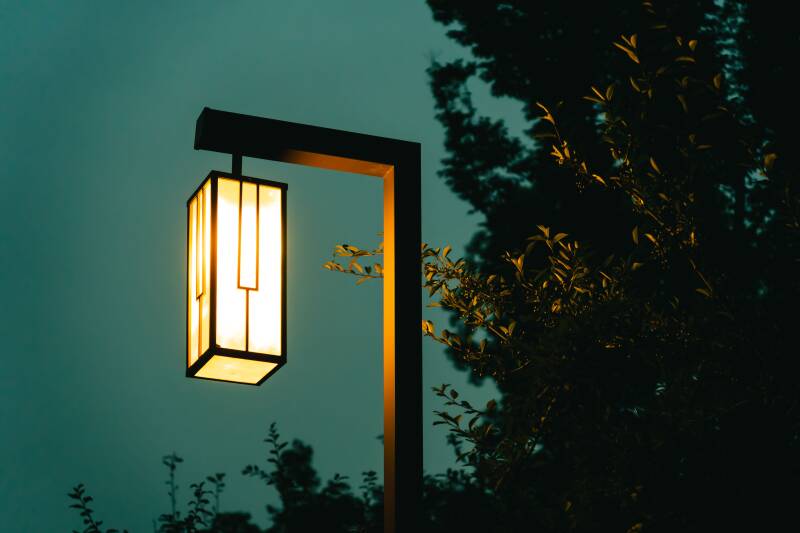
You're standing in a dim hallway at 2 a.m., half-asleep, navigating by memory toward the bathroom. Now imagine being 75, with eyes that gather about a third of the light they did at 20, on a path you've walked a thousand times — but tonight, there's a stray shoe you didn't see.
That's how falls happen. Not in dramatic moments, but in the dark.
Here's what the research actually says about lighting and falls, and what families in Henderson, Las Vegas, and Boulder City can do about it before a preventable fall changes everything.
The Numbers Don't Lie
Falls are the leading cause of injury among adults aged 65 and older. According to the CDC, over 14 million — one in four — older adults report falling every year. One out of every five falls results in a serious injury like a broken bone or head trauma. And falls aren't just dangerous, they're expensive: the CDC estimates roughly $50 billion is spent annually on medical costs for non-fatal fall injuries among older adults.
Lighting plays a bigger role in this than most families realize. Three separate studies tell the story from three different angles.
Dark homes send people to the doctor. A 2026 study in PLOS One followed community-dwelling adults over 65 in England — about 5,500 people per wave, tracked across ten waves from 2002 to 2023. Older adults living in homes described as "too dark or without enough light" were significantly more likely to have a fall serious enough to require a healthcare visit. The size of the effect: a 9.3 percentage-point increase in the probability of that outcome.
More light means fewer falls, and we can measure it. A 2025 study in the Journal of Applied Gerontology actually took light meter readings in 12 long-term care facilities in New Zealand. The results were sobering: 57.7% of bedrooms and 68.5% of bathrooms fell below the 300-lux level recommended for focused activity. But the useful finding is what happened as the light went up. In dining rooms, bathrooms, and facility lighting overall, every 100-lux increase in lighting was associated with a 9–10% reduction in the fall rate.
And it isn't only about brightness — timing matters too. Researchers at Brigham and Women's Hospital studied 758 residents across four care homes and published the results in JAMDA in 2022. At two of the homes, they changed the blue-wavelength content of the ambient lighting dynamically across the day and night — bright and blue-rich by day, warm and dim by night. The other two homes kept fixed lighting. Residents under the dynamic lighting had a 43% lower fall rate.
That last study is worth sitting with, because it changes the advice. It wasn't simply that residents could see better. Light regulates the body clock, and a body clock that's working properly means better sleep, better alertness, and steadier walking. Which means the goal isn't just "more light." It's the right light at the right hour: generous, bright light during the day, and low, warm light at night.
Why Seniors Need More Light
As we age, our eyes change in ways that make poor lighting especially dangerous:
- Older eyes gather less light. By age 65, the retina receives roughly a third of the light it did at age 20. A room that looks perfectly fine to a 40-year-old can read as dim and shadowy to their parent.
- Glare becomes a bigger problem. Seniors are more sensitive to glare, and a bare bulb or a shiny floor reflecting a light source can make hazards harder to see, not easier.
- Depth perception declines. Judging distances, step heights, and edges gets harder in low light — which is exactly why stairs are so dangerous.
- Recovery time slows. Moving from a lit room into a dark hallway takes older eyes noticeably longer to adjust, leaving a window of near-blindness during the transition.
Poor lighting doesn't just make it harder to see — it makes it harder to balance. The brain relies on visual information to hold the body upright. When shadows and glare degrade that information, stability goes with it.
The Most Dangerous Rooms
Bathrooms. Roughly 80% of bathroom injuries are falls. Wet floors, hard surfaces, low light, and middle-of-the-night trips make this a perfect storm. It's also the room most likely to be under-lit — nearly 7 in 10 in that New Zealand study.
Bedrooms. Second most dangerous, largely because of those nighttime trips. It's also the easiest room to fix.
Stairways. Stairs require accurate depth judgment, and depth judgment is the first thing to go in dim light. The National Institute on Aging specifically recommends lighting at both the top and bottom of every staircase.
Hallways. Hallways collect clutter, shoes, and cords — hazards that are effectively invisible in low light.
The Fix, Room by Room
Two principles run through everything below:
- Layer the light. One ceiling fixture creates a bright center and shadowy edges. Ambient light plus task light plus a low night layer beats a single bright bulb every time.
- Match the hour. Bright and cool-toned during the day. Dim and warm-toned after dark.
🌙 Throughout the Home
- Go brighter than feels necessary. For general room lighting, 800–1,100 lumens per bulb is a reasonable floor. For task areas — bathroom vanity, kitchen counter, reading chair, stair landings — aim higher, 1,100–1,600 lumens.
- Keep bulb color consistent. Mixing warm and cool bulbs in one space creates uneven pools of light and confusing shadows. Pick one color temperature per room: roughly 3000K for living spaces, up to 4000K for task areas.
- Kill the glare. Frosted bulbs, shades, and indirect light aimed at ceilings or walls. Never leave a bare bulb where someone will look at it directly.
- Add contrast, not just light. Light-colored switch plates on dark walls, contrasting tape or paint on stair edges, and a bath mat that clearly differs from the floor color all help older eyes find edges.
- Put a switch at every entrance. Nobody should have to cross a dark room to turn on the light. Same at the top and bottom of stairs.
- Use motion sensors and timers. Motion-sensor bulbs and plug-in sensors cost a few dollars and remove the fumbling entirely. Photocell or timer-controlled lamps that come on at dusk mean nobody comes home to a dark house.
- Open the blinds during the day. Daytime light exposure is what keeps the body clock — and sleep — on track. Bright days make for steadier nights.
- Keep a flashlight by the bed with fresh batteries, and consider a plug-in nightlight with battery backup that stays lit during a power outage.
🛏️ Bedrooms
- Put a lamp or switch within arm's reach of the bed — reaching for a distant switch in the dark is its own hazard.
- Use a warm, amber-toned nightlight, not a bright white one. Warm light preserves night vision and is far less disruptive to sleep.
- Consider motion-activated under-bed or baseboard lighting that comes on when feet hit the floor. This is the single best upgrade for the 2 a.m. bathroom trip.
- Avoid a bright overhead light at night. Going from pitch dark to full brightness causes a period of temporary blindness while the eyes adjust — which is exactly when people fall.
- Keep frequently used items within easy reach so nobody is stretching or climbing in low light.
🚿 Bathrooms
- Light the whole path, not just the destination. Nightlights should run bedroom → hallway → bathroom door → inside the bathroom.
- Add bright, even overhead lighting for bathing and grooming — this is task lighting, so go bright.
- Use non-glare bulbs around mirrors, and light the face from both sides rather than overhead, which casts shadows.
- A motion-sensor toilet light or a warm night-level light inside the bathroom means never having to hit the main switch at 2 a.m.
- Watch for reflection glare on wet tile and glass shower doors.
🚪 Stairways and Hallways
- Light both the top and the bottom. A stairway lit from one end only creates a dark landing at the other.
- Make the treads visible: light that rakes across the steps reveals edges better than light shining straight down.
- Add contrasting strips on the leading edge of each step.
- Run nightlights the full length of hallways — a single one at the end leaves dark stretches.
- Voice- or sound-activated smart bulbs let someone turn on a hallway light without finding a switch.
🍳 Kitchens
- Under-cabinet lighting eliminates the shadow that a person's own body casts over the counter.
- Light the inside of the pantry and any deep cabinets.
- Bright light over the stove and sink — the two places where a distraction is most costly.
🚗 Entryways and Outside
- Light the path from the driveway or curb to the door, and light the door itself so keys are findable.
- Motion-sensor porch lights handle arrivals after dark.
- Light any step, threshold, or grade change outside. In Southern Nevada, uneven walkways and desert landscaping edging are common trip points that disappear at dusk.
⚠️ Don't Create New Hazards
This part gets missed constantly:
- New lamps mean new cords. Route every cord along a baseboard or under furniture, never across a walking path. A cord fix takes two minutes and adhesive clips.
- Don't let a senior change bulbs on a ladder or step stool. Climbing to fix the lighting is a leading way to fall while trying to prevent falls. Batch the bulb changes and have someone else do them.
- Bulbs dim before they die. LEDs lose output gradually, so a fixture can be well below spec while still "working." Replace on a schedule, not on failure.
- Bifocals and stairs don't mix. The lower lens distorts depth perception on steps. Many optometrists recommend a single-vision distance pair for walking and stairs.
- Book the eye exam. No amount of lighting compensates for uncorrected vision or an untreated cataract. An annual exam is part of fall prevention.
The Night Walk-Through
Do this once, tonight, and you'll find more than you expect. Wait until fully dark, then walk the home the way your loved one does — bedroom to bathroom, bedroom to kitchen, front door to living room. At each point ask:
- Can I see every step, edge, and threshold clearly?
- Is there a stretch of this path with no light at all?
- Do I have to cross a dark area to reach the switch?
- Is there anything on the floor I can't see until I'm on top of it?
- Am I looking directly into a bare bulb or a reflection anywhere?
- If the power went out right now, could I get back to bed safely?
Every "no" is a fix, and most of them cost less than dinner out.
What This Costs
Almost every fix on this list costs less than a tank of gas. Grouped by how long it takes:
Do it tonight — minutes each
- Brighter LED bulbs — about $3–8 per bulb
- Plug-in nightlights — about $5–15 each
- Motion-sensor bulb or plug-in motion sensor — about $10–25
Do it this weekend — under an hour each
- Under-bed or baseboard motion lighting — about $20–40
- Stair-edge contrast tape — about $10–20
- Smart bulbs with voice control — about $10–20 each
Worth planning for
- Under-cabinet LED strips — about $20–50, an afternoon
- Adding a switch or a hardwired fixture — call an electrician, roughly half a day
Prices are approximate and worth checking locally.
When to Act
The CDC's STEADI program (Stopping Elderly Accidents, Deaths & Injuries) recommends that healthcare providers screen every older patient for fall risk. But families don't need to wait for a doctor's visit.
If you notice a loved one doing any of the following, lighting is likely part of the problem:
- Hesitating before stepping into a room
- Reaching for walls or furniture in dim areas — "furniture surfing" in the dark
- Mentioning that rooms feel too dark
- Navigating by memory rather than by sight
- Avoiding certain rooms or the whole upstairs after dark
- Sleeping poorly, or seeming foggy and unsteady in the evenings
A Final Word
Poor lighting isn't an inconvenience. It's a hazard with a measurable cost — a 9.3 percentage-point jump in the odds of a fall serious enough to need medical care, and a fall rate that drops 9–10% for every 100 lux you add back.
What makes it worth acting on is that the fix is so small. Brighter bulbs. Warm nightlights. A motion sensor. A flashlight by the bed. Cords tucked out of the walkway. These aren't renovations — they're an afternoon and a trip to the hardware store, and they can be the difference between a loved one staying in their home and a loved one leaving it on a stretcher.
Because staying in your own home, staying active, and staying safe aren't competing goals. They're the same goal. And sometimes the tool that makes all three possible is as simple as turning on the light.
📚 Resources
- CDC — Older Adult Fall Prevention (STEADI)
- National Institute on Aging — Preventing Falls at Home, Room by Room
- National Council on Aging — Falls Prevention Resources
- Mayo Clinic — Fall Prevention Tips
- PLOS One (2026) — When home is a dangerous place
- Journal of Applied Gerontology (2025) — Shedding Light on Falls
- JAMDA (2022) — Impact of Upgraded Lighting on Falls in Care Home Residents
🏠 Need Help Making a Home Safer?
If you're preparing a home for a loved one's return from a hospital or rehab stay — or you just want to reduce fall risks before something happens — True Task can help.
We specialize in senior downsizing, decluttering, and home reorganization in Henderson, Las Vegas, and Boulder City, NV. We'll clear clutter, widen pathways, and make sure your loved one's home is safe, well-lit, and ready for whatever mobility aids they're using.
We offer free, no-pressure in-home evaluations. Call (702) 439-2352 or schedule yours here.